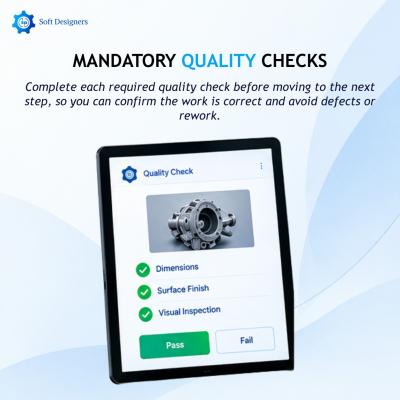
Handling each manufacturing work instruction digitally is really about closing the gap between what a procedure says and what actually happens at the station. Small variations in how different operators interpret the same paper instruction can add up to real defects over time, even when everyone thinks they're following the same steps. A digital version lets a supervisor track completion times, confirm sign-offs, and collect feedback from operators as they work, rather than finding out about a problem after a batch ships. Soft Designers' manufacturing work instruction tools are built around this kind of visibility, aimed at keeping error rates down and quality metrics steady across shifts.